Buy easylove.co.uk ?
We are moving the project
easylove.co.uk .
Are you interested in purchasing the domain
easylove.co.uk ?
domain@kv-gmbh.de · 0541-91531010
Buy easylove.co.uk ?
Does n^2 converge to infinity?
Yes, as n^2 grows larger, it will approach infinity. This is because as n increases, the value of n^2 will also increase without bound. Therefore, n^2 does converge to infinity as n approaches infinity. **
How do you determine the limit for n approaching infinity?
To determine the limit for n approaching infinity, you can use various methods such as the squeeze theorem, the ratio test, or the comparison test. These methods help to determine the behavior of a sequence or series as n becomes very large. You can also analyze the terms of the sequence or series to see if they converge or diverge as n approaches infinity. Additionally, you can use algebraic manipulation or limit laws to simplify the expression and evaluate the limit as n goes to infinity. **

Similar search terms for Silk-n-Infinity-Premium
Top-Angebote
Products related to Silk-n-Infinity-Premium:
-
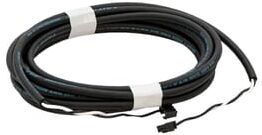
Rinnai N Series Multiple EZ Connection Cable 8mtrThe Rinnai N Series Multiple EZ Connection Cable can be used to sequence 2 heaters only, and will monitor the flow rate via the PCB of the heater. The lead heater will alternate to allow even wear across both heaters.63,00 £*Shipping: 5,00 £Secure redirect to the provider
-
Rinnai N Series Multiple EZ Connection Cable 3mtrRinnai N Series Multiple EZ Connection Cable – 3 Metres (AWEZC(N)-02) The Rinnai N Series Multiple EZ Connection Cable links two Rinnai N Series continuous flow water heaters into a single, sequenced system. Once connected, the two units communicate directly through their PCBs, monitoring water flow rate and alternating which unit leads, so the load is shared rather than falling on one heater alone. This kind of automatic sequencing reduces wear on any single appliance, improves overall system reliability, and keeps hot water delivery consistent across both units. For homes or light commercial premises with genuinely high hot water demand, it's a straightforward way to twin two heaters without adding an external controller. Note: this cable is not compatible with the Rinnai 16i. Key Features & Benefits34,50 £*Shipping: 5,00 £Secure redirect to the provider
-
Madison and Park INFINITY Head Spa Bed, U-Shape Water Massage Shampoo Backwash Unit with Full Body Massage - N/A"Weight Capacity: 440 Lbs. Room Space needed: 85"" Length x 40"" Wide. Rated Output/Input Voltage: AC 110V-120V. Water Circulation System Output: 800-1000 Watts. Fumigation System Output: 1000 Watts"3222,49 $*Shipping: 0,00 $Secure redirect to the provider


-
Silk rooster or silk hen?
It depends on what you are looking for. A silk rooster will have more vibrant and colorful plumage, and they are known for their beautiful and long flowing tail feathers. On the other hand, a silk hen will have a more subdued and elegant appearance, with a focus on their soft and lustrous feathers. Both have their own unique beauty, so it ultimately comes down to personal preference and what you are looking for in a silk bird. **
-
How can I prove that for n approaching infinity, when the limit approaches infinity, no logarithmic Stirling equation is allowed?
As n approaches infinity, the Stirling approximation for factorials is commonly used to approximate the factorial function. However, the Stirling approximation is not accurate when n approaches infinity and the limit approaches infinity. This is because the Stirling approximation includes a logarithmic term that becomes insignificant compared to the factorial term as n grows large. Therefore, in the limit as n approaches infinity and the result approaches infinity, the logarithmic Stirling equation is not allowed as it does not accurately capture the behavior of factorials in this scenario. **
-
Is infinity times infinity greater than infinity?
In mathematics, infinity times infinity is not a well-defined operation, as infinity is not a number but a concept representing something unbounded or limitless. Therefore, it is not meaningful to compare the size of infinity times infinity with just infinity. In the context of cardinality, the cardinality of the set of real numbers is the same as the cardinality of the set of real numbers squared, both of which are considered to be the same size of infinity. **
-
How can I prove that for n approaching infinity, when the limit goes to infinity, no logarithm-Stirling equation is allowed?
As n approaches infinity, the logarithm-Stirling equation states that the factorial of n can be approximated by Stirling's formula, which involves logarithmic terms. However, as n goes to infinity, the factorial function grows faster than any exponential function, including the logarithmic terms in Stirling's formula. Therefore, the logarithm-Stirling equation is not valid for n approaching infinity when the limit goes to infinity. This can be proven by comparing the growth rates of the factorial function and the logarithmic terms in Stirling's formula as n becomes very large. **


How can I prove that for n approaching infinity, when the limit goes to infinity, no logarithmic Stirling equation is allowed?
As n approaches infinity, the logarithmic Stirling equation states that n! is approximately equal to n*log(n) - n. However, as n approaches infinity, the term n*log(n) dominates the expression, causing n! to grow much faster than n*log(n) - n. Therefore, the limit of n! as n approaches infinity also goes to infinity, making it incompatible with the logarithmic Stirling equation. This can be proven by comparing the growth rates of n! and n*log(n) - n as n approaches infinity. **
Is infinity squared a different infinity than infinity?
No, infinity squared is not a different infinity than infinity. In mathematics, infinity is considered a concept rather than a specific number, so operations like squaring infinity do not change its value. Both infinity and infinity squared represent the idea of endlessness or unboundedness, so they are essentially the same concept in this context. **
Top-Angebote
Products related to Silk-n-Infinity-Premium:
-
Dale Tiffany Crimson Infinity Red Handcrafted Art Glass Sculpture - N/AThe Crimson Infinity sculpture showcases sweeping curves and rich crimson hues in an unforgettable contemporary design. Its looping silhouette symbolizes endless motion while adding bold artistic flair to your space.53,99 $*Shipping: 0,00 $Secure redirect to the provider
-
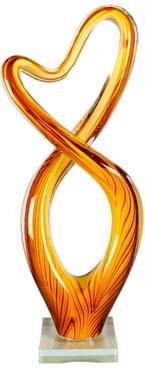
Dale Tiffany Golden Brown Infinity Handcrafted Art Glass Sculpture - N/AThe graceful infinity sculpture showcases golden amber art glass in a striking hand-blown design. Flowing lines and graceful movement create a captivating focal point while complementing both modern and transitional interiors.97,49 $*Shipping: 0,00 $Secure redirect to the provider
-
Rinnai N Series Multiple EZ Connection Cable 8mtrThe Rinnai N Series Multiple EZ Connection Cable can be used to sequence 2 heaters only, and will monitor the flow rate via the PCB of the heater. The lead heater will alternate to allow even wear across both heaters.63,00 £*Shipping: 5,00 £Secure redirect to the provider
-
Rinnai N Series Multiple EZ Connection Cable 3mtrRinnai N Series Multiple EZ Connection Cable – 3 Metres (AWEZC(N)-02) The Rinnai N Series Multiple EZ Connection Cable links two Rinnai N Series continuous flow water heaters into a single, sequenced system. Once connected, the two units communicate directly through their PCBs, monitoring water flow rate and alternating which unit leads, so the load is shared rather than falling on one heater alone. This kind of automatic sequencing reduces wear on any single appliance, improves overall system reliability, and keeps hot water delivery consistent across both units. For homes or light commercial premises with genuinely high hot water demand, it's a straightforward way to twin two heaters without adding an external controller. Note: this cable is not compatible with the Rinnai 16i. Key Features & Benefits34,50 £*Shipping: 5,00 £Secure redirect to the provider
-
Does n^2 converge to infinity?
Yes, as n^2 grows larger, it will approach infinity. This is because as n increases, the value of n^2 will also increase without bound. Therefore, n^2 does converge to infinity as n approaches infinity. **
-
How do you determine the limit for n approaching infinity?
To determine the limit for n approaching infinity, you can use various methods such as the squeeze theorem, the ratio test, or the comparison test. These methods help to determine the behavior of a sequence or series as n becomes very large. You can also analyze the terms of the sequence or series to see if they converge or diverge as n approaches infinity. Additionally, you can use algebraic manipulation or limit laws to simplify the expression and evaluate the limit as n goes to infinity. **
-
Silk rooster or silk hen?
It depends on what you are looking for. A silk rooster will have more vibrant and colorful plumage, and they are known for their beautiful and long flowing tail feathers. On the other hand, a silk hen will have a more subdued and elegant appearance, with a focus on their soft and lustrous feathers. Both have their own unique beauty, so it ultimately comes down to personal preference and what you are looking for in a silk bird. **
-
How can I prove that for n approaching infinity, when the limit approaches infinity, no logarithmic Stirling equation is allowed?
As n approaches infinity, the Stirling approximation for factorials is commonly used to approximate the factorial function. However, the Stirling approximation is not accurate when n approaches infinity and the limit approaches infinity. This is because the Stirling approximation includes a logarithmic term that becomes insignificant compared to the factorial term as n grows large. Therefore, in the limit as n approaches infinity and the result approaches infinity, the logarithmic Stirling equation is not allowed as it does not accurately capture the behavior of factorials in this scenario. **
Similar search terms for Silk-n-Infinity-Premium
-
Madison and Park INFINITY Head Spa Bed, U-Shape Water Massage Shampoo Backwash Unit with Full Body Massage - N/A"Weight Capacity: 440 Lbs. Room Space needed: 85"" Length x 40"" Wide. Rated Output/Input Voltage: AC 110V-120V. Water Circulation System Output: 800-1000 Watts. Fumigation System Output: 1000 Watts"3222,49 $*Shipping: 0,00 $Secure redirect to the provider
-
Inspired Living Infinity Cube Stress Relief Toy Premium Metal Fidget Cube For Anxiety Relief & Focus goldWhen your mind feels busy and your hands need something to do, this Infinity cube is the kind of small comfort that makes a big difference. Designed for both kids and adults, it flips, folds, and flows endlessly to help you unwind in seconds....23,97 $*Shipping: 0,00 $Secure redirect to the provider
-
Is infinity times infinity greater than infinity?
In mathematics, infinity times infinity is not a well-defined operation, as infinity is not a number but a concept representing something unbounded or limitless. Therefore, it is not meaningful to compare the size of infinity times infinity with just infinity. In the context of cardinality, the cardinality of the set of real numbers is the same as the cardinality of the set of real numbers squared, both of which are considered to be the same size of infinity. **
-
How can I prove that for n approaching infinity, when the limit goes to infinity, no logarithm-Stirling equation is allowed?
As n approaches infinity, the logarithm-Stirling equation states that the factorial of n can be approximated by Stirling's formula, which involves logarithmic terms. However, as n goes to infinity, the factorial function grows faster than any exponential function, including the logarithmic terms in Stirling's formula. Therefore, the logarithm-Stirling equation is not valid for n approaching infinity when the limit goes to infinity. This can be proven by comparing the growth rates of the factorial function and the logarithmic terms in Stirling's formula as n becomes very large. **
-
How can I prove that for n approaching infinity, when the limit goes to infinity, no logarithmic Stirling equation is allowed?
As n approaches infinity, the logarithmic Stirling equation states that n! is approximately equal to n*log(n) - n. However, as n approaches infinity, the term n*log(n) dominates the expression, causing n! to grow much faster than n*log(n) - n. Therefore, the limit of n! as n approaches infinity also goes to infinity, making it incompatible with the logarithmic Stirling equation. This can be proven by comparing the growth rates of n! and n*log(n) - n as n approaches infinity. **
-
Is infinity squared a different infinity than infinity?
No, infinity squared is not a different infinity than infinity. In mathematics, infinity is considered a concept rather than a specific number, so operations like squaring infinity do not change its value. Both infinity and infinity squared represent the idea of endlessness or unboundedness, so they are essentially the same concept in this context. **
* All prices are inclusive of VAT and, if applicable, plus shipping costs. The offer information is based on the details provided by the respective shop and is updated through automated processes. Real-time updates do not occur, so deviations can occur in individual cases. ** Note: Parts of this content were created by AI.